
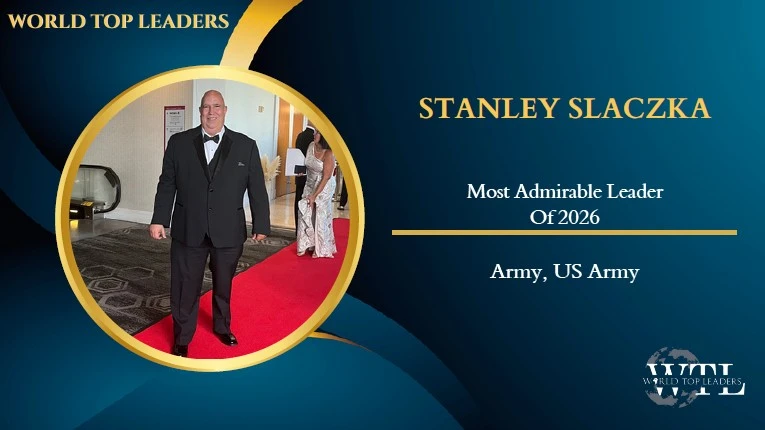
Stanley Slaczka
Most Admirable Leader Of 2026
Stanley Slaczka: Building Leadership Through Discipline, Teamwork, and Perseverance
United States Army
Stanley Slaczka’s military journey began with a decision to serve, but the lessons he gained through that experience extended far beyond his assigned duties. From working as an armored cavalry tank crew member to serving as a light wheeled vehicle technician in the United States Army Reserve, his career has been shaped by discipline, teamwork, setbacks, and a determination to keep moving forward. Over time, these experiences helped him develop a strong interest in what makes leaders effective, particularly when they must work under pressure and guide others through difficult situations.
After graduating from high school in 1989, Slaczka took time to consider his next step before joining the delayed entry program of the United States Army. He began basic training on October 17, 1990, and entered active military service as an armored cavalry soldier. His early experience in tank operations introduced him to the demands of teamwork, responsibility, and coordinated action. Military service also taught him that leadership is tested when circumstances become difficult and the ability to remain focused matters as much as technical skill.
Following four years of active-duty service, Slaczka pursued additional education in automotive and diesel technology through a program designed to help him earn promotion points. He subsequently continued his military career in the Army Reserve as a light wheeled vehicle technician. This transition gave him experience in a different area of military operations while allowing him to remain committed to service.
Yet one of the most important turning points in his development came through disappointment. After failing Sergeant school, he began questioning the effectiveness of leadership around him. He observed situations in which leaders struggled to complete their missions, an experience that prompted him to think more deeply about accountability and the responsibilities that come with authority. Rather than allowing this setback to define his progress, he used it as a reason to examine leadership more closely and consider how he could improve his own approach.
That experience became part of a larger personal philosophy built around perseverance. For Slaczka, leadership is not simply about holding a position or giving instructions. It is about continuing to learn, taking responsibility, and finding ways to move forward when the path becomes difficult.
A Leadership Style Built on Example and Adaptability
Slaczka describes his leadership approach as a combination of directive, delegating, and participative styles. Each serves a different purpose, depending on the people involved and the demands of a situation. A directive approach provides clarity when decisions must be made quickly. Delegation gives others the opportunity to take responsibility, while participation allows different perspectives to contribute to a shared goal.
He views these approaches as connected parts of a single leadership philosophy rather than separate methods. Effective leadership requires the ability to recognize what a team needs at a particular moment. Some situations call for firm direction, while others benefit from trust, cooperation, and shared decision-making.
Leading by example remains central to his approach. Slaczka acknowledges that every leader has weaknesses, but he believes leaders should make a consistent effort to improve themselves and set a standard others can follow. Authority alone cannot earn lasting respect. Leaders must demonstrate commitment through their own actions, especially when the work becomes demanding.
His military experience also shaped his understanding of teamwork. He credits the people who led him throughout his career with teaching him different aspects of leadership. Rather than relying on a single model, he learned from the strengths of different individuals and developed his own perspective. He believes a team becomes stronger when its members work together, make the best use of available resources, and remain prepared for unexpected challenges.
Planning is another important part of this philosophy. Slaczka stresses the need for backup plans and additional alternatives because even a carefully prepared strategy may need to change. His approach reflects a practical lesson from military service: preparation cannot eliminate every difficulty, but it can help a team respond more effectively when circumstances change.
Perseverance as a Foundation for Growth
For Slaczka, perseverance is not simply the ability to endure hardship. It is the decision to continue working toward improvement despite setbacks, fatigue, or uncertainty. He recognizes that professional and personal challenges can test people mentally and physically. What matters, in his view, is how they respond when progress becomes difficult.
His own experiences have reinforced this belief. Military service exposed him to demanding conditions in which discipline and determination were essential. His failure at Sergeant school also forced him to confront disappointment and reconsider his understanding of leadership. Rather than treating failure as the end of an opportunity, he turned it into a reason to learn more about the qualities that make leaders effective.
This commitment to personal growth eventually found expression in his writing. Slaczka authored The Structure of Perseverance, a book through which he seeks to encourage individuals to develop their abilities and strengthen their determination. The book reflects his belief that people can improve when they take responsibility for their development and actively work to overcome their limitations.
He also draws a connection between perseverance and motivation. Determination may help someone begin a difficult task, but maintaining that effort requires discipline. Slaczka believes people must learn to motivate themselves rather than depend entirely on encouragement from others. His message is rooted in the idea that individual growth begins with a willingness to keep working, even when recognition or immediate results are absent.
Making Clear Decisions Under Pressure
High-pressure situations demand more than quick reactions. They require people to manage their emotions, assess the circumstances, and decide on a practical course of action. Slaczka emphasizes the importance of remaining calm enough to think clearly when faced with difficult decisions.
He uses several methods to help himself maintain focus, including relaxation techniques, lessons drawn from past experiences, and the example of leaders he has known. He also turns to his writing as a source of guidance. These tools help him reflect on the situation rather than allow immediate emotions to control his response.
Slaczka recognizes that emotions can sometimes provide energy during difficult moments, but he also understands the importance of keeping them in perspective. Anger, frustration, or exhaustion can affect judgment if they are not managed carefully. A leader must therefore understand personal reactions and find ways to remain focused on the task.
Preparation plays an equally important role. His emphasis on contingency planning reflects the need to think beyond the immediate challenge. Considering alternatives allows leaders to respond when an original plan no longer works. This mindset is useful in environments where conditions can change quickly and teams depend on clear direction.
For Slaczka, sound decisions are connected to experience, self-control, preparation, and the ability to learn from others. These qualities help leaders remain effective even when circumstances do not unfold as expected.
Continuous Learning in a Changing World
Slaczka believes that education should remain a lifelong pursuit. His view of professional development extends beyond formal training or the completion of a course. He encourages people to keep learning, build their knowledge gradually, and remain motivated to improve their understanding of the world around them.
He places particular importance on language and reading. In his view, words are the building blocks of knowledge, helping people understand ideas and communicate them more effectively. Developing a strong foundation in language can support further learning across different subjects and areas of work.
This emphasis on learning also informs his perspective on innovation and technology. Slaczka is concerned that technological progress can move faster than public understanding. He argues that people need clearer information about new developments so they can better understand their purpose and potential. He also calls for more meaningful discussion of emerging technology rather than an excessive focus on familiar devices or older innovations.
His perspective highlights an important challenge for leaders: progress depends not only on the development of new tools but also on the willingness of people to understand and use them responsibly. Continuous learning can help individuals remain adaptable as their professional environments change.
Slaczka’s approach does not present education as a task that ends after reaching a particular position. Instead, he sees it as an ongoing responsibility. Leaders who continue learning are better prepared to question assumptions, explore different ideas, and adjust their methods when circumstances demand it.
A Lasting Message for Future Leaders
Slaczka’s leadership philosophy brings together several themes that have remained important throughout his military service: discipline, teamwork, adaptability, and perseverance. His journey demonstrates how professional experiences, including difficult ones, can shape a person’s understanding of responsibility and personal growth.
He believes aspiring leaders should strive to develop their full potential. His advice is direct: “Be All You Can Be!” The statement reflects his conviction that individuals should make the most of their abilities rather than allow setbacks or outside opinions to determine what they can achieve.
His ambition to become the fiercest leader he can be reflects the determination that runs through his personal and professional outlook. For him, leadership is an ongoing process of learning, self-improvement, and setting an example for others. It requires the willingness to face weaknesses, develop new skills, and continue working toward higher standards.
Through The Structure of Perseverance, Slaczka seeks to extend these lessons beyond his own experiences and encourage others to take an active role in their development. His message is relevant to people in military service, business, and other fields where teamwork and resilience matter.
Ultimately, Slaczka’s story is about the work required to become a better leader. His experience in the United States Army and Army Reserve gave him a foundation in discipline and cooperation, while personal setbacks encouraged him to examine leadership and perseverance more deeply. He continues to promote the value of motivation, education, preparation, and personal responsibility.
His central message is simple: leadership is not defined by a title alone. It is demonstrated through action, strengthened through experience, and sustained by the determination to keep moving forward.