
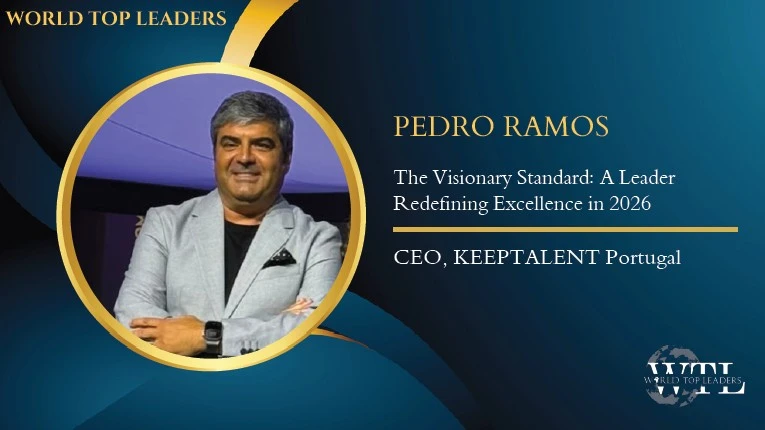
Pedro Ramos
The Visionary Standard: A Leader Redefining Excellence in 2026
The Visionary Standard: A Leader Redefining Excellence in 2026
Pedro Ramos, CEO of KEEPTALENT Portugal, has built a career around a simple but powerful belief: leadership begins with people. With more than three decades of experience in human resources, executive management, organizational development, and leadership education, he has worked across different industries and cultural environments, helping organizations navigate change while bringing out the best in their people. His journey, however, has not followed a predictable path. It has been shaped by unexpected opportunities, difficult decisions, personal reinvention, and a continued commitment to learning.
Growing up in Lisbon, Portugal, in a modest family, Ramos developed an early understanding of work, responsibility, and relationships. His parents ran small businesses, where he gained valuable lessons in communication, negotiation, and understanding people’s needs. His academic journey also began unexpectedly when an administrative error led to his admission to a university course in Education Sciences, a path he had not originally planned to follow. What initially appeared to be a mistake became an important turning point. While studying, he began training adults in sales and customer service, discovering a lasting interest in learning, professional development, and human potential.
His commitment to education continued throughout his professional career. Alongside his executive responsibilities, Ramos pursued further academic studies, earning a PhD in Economics and a Master’s degree in Sociology. These qualifications reflect his continued interest in research, society, organizations, and the factors that shape human and professional development. Today, this academic foundation complements his work as a researcher and university professor, allowing him to connect theoretical knowledge with practical experience. His own journey reflects the value he places on lifelong learning, intellectual curiosity, and continuous personal development.
Over the years, Ramos held senior HR and executive positions at respected organizations, including TAP Air Portugal, Groundforce, OGMA, CARRIS, and Imprensa Nacional-Casa da Moeda. He also served as CEO of Dale Carnegie Portugal, gaining further experience in leadership development and organizational performance. Each role brought different responsibilities and challenges, strengthening his understanding of how people, business priorities, and organizational culture influence one another. Today, as CEO of KEEPTALENT Portugal, he brings these experiences together through consulting, leadership development, organizational transformation, teaching, writing, and international speaking.
His professional journey also includes a period of significant personal and career change during the COVID-19 pandemic. Faced with an unexpected disruption, Ramos had to reconsider his professional direction and rebuild his identity. Rather than viewing this period as an ending, he treated it as an opportunity to begin again. That experience further shaped his understanding of resilience and reinforced his belief that meaningful professional growth often comes from moments of uncertainty.
Leadership That Begins with People
Ramos describes his leadership philosophy in three words: “Leading is Caring.” For him, leadership is not defined by job titles, authority, or the ability to give instructions. It is about creating an environment where people feel respected, supported, and encouraged to contribute. He believes that organizations achieve lasting results when employees understand their purpose and recognize the value of their work.
His approach has evolved through years of executive responsibility and direct experience with different organizational cultures. He has learned that technical knowledge, business plans, and strategic thinking are important, but they cannot deliver meaningful results without the support and involvement of people. Even the strongest strategy can struggle when employees do not understand its purpose or feel excluded from the process.
Active listening, empathy, transparency, inclusion, and shared responsibility are central to his management style. However, caring does not mean lowering expectations. Ramos believes leaders must maintain high standards while respecting the dignity and individual needs of their teams. He sees no conflict between being demanding and being understanding. Instead, he considers both essential to building a strong organization.
His experience working with senior executives also taught him that effective leadership requires a balance between business discipline and human understanding. He particularly values leaders who can make difficult decisions without losing sight of the people affected by them. For Ramos, leadership success should be measured not only through financial performance or organizational growth but also through the development and well-being of the people who contribute to those achievements.
Making Innovation Meaningful
In Ramos’s view, innovation has become essential to organizational survival and long-term progress. However, he believes it should not be limited to technology, artificial intelligence, digital systems, or new business models. Innovation must also influence how organizations manage people, develop leaders, build workplace cultures, and respond to changing expectations.
As businesses adopt new technologies, he sees an important responsibility for leaders: ensuring that progress does not weaken human relationships. Artificial intelligence and digital transformation can improve productivity, support better decisions, and create new opportunities. Yet their value depends on how thoughtfully they are introduced and how well people are prepared to work with them.
He believes future leaders will need to combine technological understanding with critical thinking, cultural awareness, adaptability, and empathy. This combination will become increasingly important as organizations manage teams across different generations, countries, and professional backgrounds.
Ramos continues to develop his own understanding through academic research, professional networks, international engagement, and regular interaction with organizations. His experience across Europe, Brazil, and Portuguese-speaking African countries has given him a broader view of leadership and the different factors that influence organizational success. As a university professor, he also values the exchange between academic knowledge and practical business experience. He believes that both worlds have much to learn from one another, and that effective leadership development should bring theory and real workplace challenges closer together.
Learning Through Challenges and Change
Throughout his career, Ramos has faced organizational restructuring, industrial transformation, labor conflicts, financial limitations, and decisions with significant consequences for employees and businesses. These experiences have shaped his approach to difficult situations, particularly when there is limited time or incomplete information.
He believes high-stakes decisions require strategic clarity, honest communication, and an understanding of the people involved. Leaders cannot always wait until every detail is known. However, acting quickly should never become an excuse for ignoring concerns or overlooking the human consequences of a decision. Listening to different perspectives, explaining the reasons behind difficult choices, and accepting responsibility are essential parts of the process.
One important lesson came from a transformation project that did not achieve its intended results. Ramos recognized that he had underestimated the emotional fatigue of employees and the resistance created by the proposed changes. Rather than continuing with an approach that was not working, he acknowledged the mistakes, reconsidered the process, and focused on rebuilding trust. The experience reinforced the importance of understanding the human side of organizational change.
He also believes that admitting mistakes demonstrates strength. Leaders who accept responsibility create opportunities for learning and improvement, while those who refuse to acknowledge problems risk losing the confidence of their teams. For Ramos, resilience is not simply the ability to withstand pressure. It is the willingness to learn, adapt, and move forward with greater understanding.
The pandemic brought this lesson into his own professional life. Rebuilding his career after an unexpected disruption helped him understand that reinvention is not a sign of failure. It can be an important part of personal and professional development.
Building a More Human Future of Leadership
Looking ahead, Ramos believes global leaders must address several connected challenges. The growing influence of artificial intelligence, the need for employee well-being, generational differences, declining trust, and the relationship between economic growth and social responsibility will all shape the future of organizations.
He argues that businesses cannot focus exclusively on financial results while overlooking the human cost of achieving them. Mental health, well-being, and sustainable performance must become important parts of organizational planning. Similarly, differences in age, experience, culture, and professional expectations should be treated as opportunities to encourage new ideas rather than sources of conflict.
Trust is another priority. In an environment marked by uncertainty and constant change, leaders must demonstrate consistency, transparency, and ethical behavior. Employees and stakeholders need to understand not only what an organization intends to achieve but also the values guiding its decisions.
Ramos also sees significant opportunities for cooperation across the Portuguese-speaking world. Portugal, Brazil, Angola, Mozambique, Cape Verde, and other Lusophone communities share language and cultural connections that can support international partnerships, professional exchange, and business development. Through his involvement with organizations and professional networks such as DCH, ABRH Brasil, and IFTDO, he supports stronger relationships between countries, institutions, and generations.
His perspective is that competitiveness and humanity should never be treated as opposing goals. Organizations can pursue growth, strengthen their market position, and improve performance while remaining committed to responsible leadership and the development of people.
A Legacy Beyond Professional Titles
For Ramos, the real value of a leadership career is not found in the number of positions held, awards received, or organizations represented. It lies in the people and institutions that have grown through his contribution. Whether working as an executive, consultant, professor, or international speaker, he remains focused on helping individuals and organizations recognize their potential.
His advice to aspiring leaders reflects the lessons of his own journey. He encourages them to remain curious, accept challenges even when they do not feel fully prepared, and never stop learning. He also reminds them not to confuse professional position with personal identity. A title may offer authority, but it does not define a person’s values or determine the quality of their leadership.
He believes young professionals should not be afraid of failure or career changes. His own experience has shown him that success is not always a steady progression from one achievement to another. Sometimes, the ability to start again requires greater courage than continuing along a familiar path.
Ultimately, Ramos hopes to be remembered not simply as the CEO of KEEPTALENT Portugal or as a senior executive who worked with major organizations, but as someone who helped others understand the responsibility that comes with leadership. His ambition is to inspire a generation of leaders who can build successful organizations without compromising people’s dignity.
His philosophy, “Leading is Caring,” captures the principle that has guided his career and continues to shape his work. It reflects his belief that strong leadership is not measured only by the results achieved but also by the opportunities created, the people developed, and the positive changes that remain. For Pedro Ramos, caring for people is not separate from business excellence. It is one of the foundations on which lasting success is built.