Winner

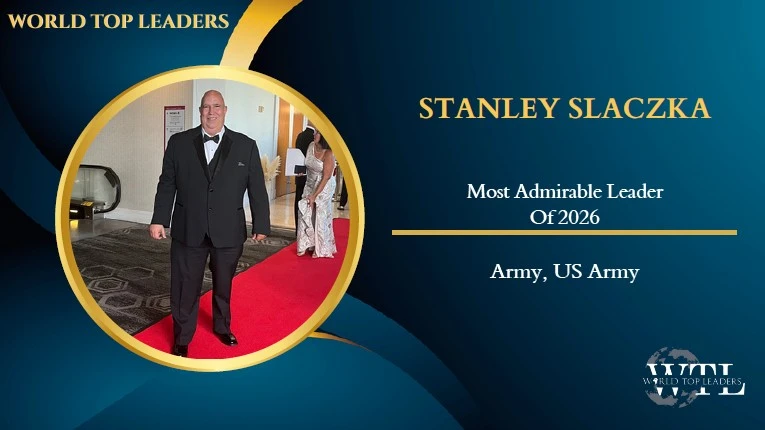
Stanley Slaczka

Stanley Slaczka (US army) – Most Admirable Leader Of 2026

Stanley Slaczka Most Admirable Leader Of 2026 Stanley Slaczka: Building Leadership Through Discipline, Teamwork, and Perseverance United States Army Stanley Slaczka’s military journey began with a decision to serve, but the lessons he gained through that experience extended far beyond his assigned duties. From working as an armored cavalry tank crew member to serving as a light wheeled vehicle technician in the United States Army Reserve, his career has been shaped by discipline, teamwork, setbacks, and a determination to keep moving forward. Over time, these experiences helped him develop a strong interest in what makes leaders effective, particularly when they must work under pressure and guide others through difficult situations. After graduating from high school in 1989, Slaczka took time to consider his next step before joining the delayed entry program of the United States Army. He began basic training on October 17, 1990, and entered active military service as an armored cavalry soldier. His early experience in tank operations introduced him to the demands of teamwork, responsibility, and coordinated action. Military service also taught him that leadership is tested when circumstances become difficult and the ability to remain focused matters as much as technical skill. Following four years of active-duty service, Slaczka pursued additional education in automotive and diesel technology through a program designed to help him earn promotion points. He subsequently continued his military career in the Army Reserve as a light wheeled vehicle technician. This transition gave him experience in a different area of military operations while allowing him to remain committed to service. Yet one of the most important turning points in his development came through disappointment. After failing Sergeant school, he began questioning the effectiveness of leadership around him. He observed situations in which leaders struggled to complete their missions, an experience that prompted him to think more deeply about accountability and the responsibilities that come with authority. Rather than allowing this setback to define his progress, he used it as a reason to examine leadership more closely and consider how he could improve his own approach. That experience became part of a larger personal philosophy built around perseverance. For Slaczka, leadership is not simply about holding a position or giving instructions. It is about continuing to learn, taking responsibility, and finding ways to move forward when the path becomes difficult. A Leadership Style Built on Example and Adaptability Slaczka describes his leadership approach as a combination of directive, delegating, and participative styles. Each serves a different purpose, depending on the people involved and the demands of a situation. A directive approach provides clarity when decisions must be made quickly. Delegation gives others the opportunity to take responsibility, while participation allows different perspectives to contribute to a shared goal. He views these approaches as connected parts of a single leadership philosophy rather than separate methods. Effective leadership requires the ability to recognize what a team needs at a particular moment. Some situations call for firm direction, while others benefit from trust, cooperation, and shared decision-making. Leading by example remains central to his approach. Slaczka acknowledges that every leader has weaknesses, but he believes leaders should make a consistent effort to improve themselves and set a standard others can follow. Authority alone cannot earn lasting respect. Leaders must demonstrate commitment through their own actions, especially when the work becomes demanding. His military experience also shaped his understanding of teamwork. He credits the people who led him throughout his career with teaching him different aspects of leadership. Rather than relying on a single model, he learned from the strengths of different individuals and developed his own perspective. He believes a team becomes stronger when its members work together, make the best use of available resources, and remain prepared for unexpected challenges. Planning is another important part of this philosophy. Slaczka stresses the need for backup plans and additional alternatives because even a carefully prepared strategy may need to change. His approach reflects a practical lesson from military service: preparation cannot eliminate every difficulty, but it can help a team respond more effectively when circumstances change. Perseverance as a Foundation for Growth For Slaczka, perseverance is not simply the ability to endure hardship. It is the decision to continue working toward improvement despite setbacks, fatigue, or uncertainty. He recognizes that professional and personal challenges can test people mentally and physically. What matters, in his view, is how they respond when progress becomes difficult. His own experiences have reinforced this belief. Military service exposed him to demanding conditions in which discipline and determination were essential. His failure at Sergeant school also forced him to confront disappointment and reconsider his understanding of leadership. Rather than treating failure as the end of an opportunity, he turned it into a reason to learn more about the qualities that make leaders effective. This commitment to personal growth eventually found expression in his writing. Slaczka authored The Structure of Perseverance, a book through which he seeks to encourage individuals to develop their abilities and strengthen their determination. The book reflects his belief that people can improve when they take responsibility for their development and actively work to overcome their limitations. He also draws a connection between perseverance and motivation. Determination may help someone begin a difficult task, but maintaining that effort requires discipline. Slaczka believes people must learn to motivate themselves rather than depend entirely on encouragement from others. His message is rooted in the idea that individual growth begins with a willingness to keep working, even when recognition or immediate results are absent. Making Clear Decisions Under Pressure High-pressure situations demand more than quick reactions. They require people to manage their emotions, assess the circumstances, and decide on a practical course of action. Slaczka emphasizes the importance of remaining calm enough to think clearly when faced with difficult decisions. He uses several methods to help himself maintain focus, including relaxation techniques, lessons drawn from past experiences, and the example of leaders he has known. He also turns to his writing as a

Stanley Slaczka (US army) – Most Admirable Leader Of 2026 Read More »
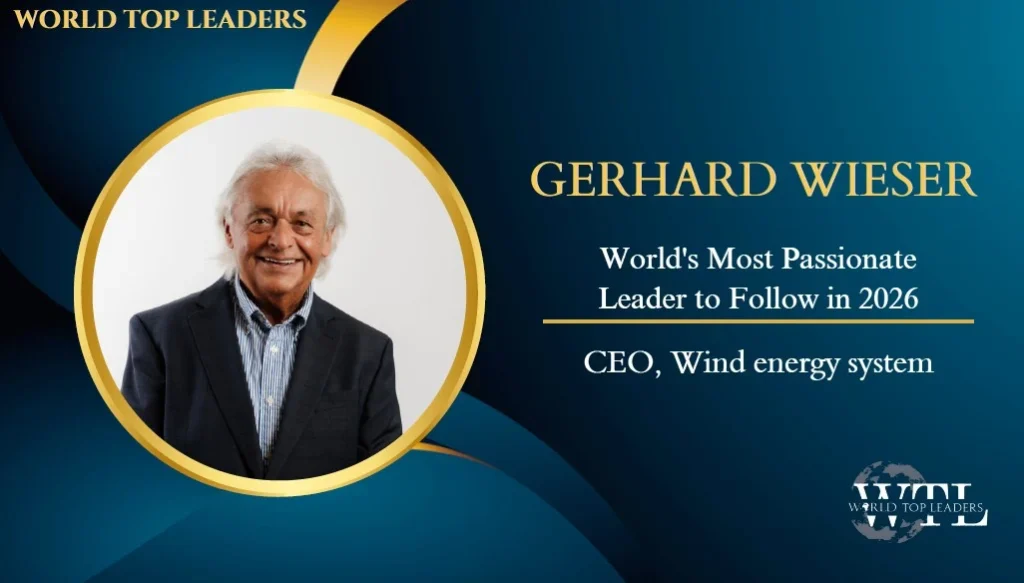
Gerhard Wieser

Gerhard Wieser (Wind energy system) – World’s Most Passionate Leader to Follow in 2026

Gerhard Wieser World’s Most Passionate Leader to Follow in 2026 Gerhard Wieser: Shaping the Future Through Renewable Energy and Sustainable Water Solutions Gerhard Wieser’s leadership journey has been shaped by a consistent belief that meaningful progress comes from connecting ideas, disciplines, and practical solutions. With experience spanning agriculture, hydropower, engineering, and renewable energy, Wieser has developed a broad perspective on some of the most important challenges facing the world today. As CEO within the wind energy sector and a leader associated with WG Kraftwerke GmbH and Windgiant Energy GmbH, he has focused his work on developing innovative wind energy systems with a purpose that extends beyond electricity generation. At the heart of his vision is a simple but ambitious idea: renewable energy technology can play a wider role in addressing resource challenges. His work explores the connection between clean energy generation and the recovery of usable water from the atmosphere, bringing two critical needs into one technological approach. This vision has developed into a patented dual-turbine system, marking an important milestone in his professional journey. Gerhard Wieser: Die Zukunft gestalten – mit erneuerbaren Energien und nachhaltigen Wasserlösungen Gerhard Wiesers Werdegang als Führungskraft ist geprägt von der festen Überzeugung, dass bedeutender Fortschritt aus der Verbindung von Ideen, Disziplinen und praktischen Lösungen entsteht. Mit seiner Erfahrung in den Bereichen Landwirtschaft, Wasserkraft, Ingenieurwesen und erneuerbare Energien hat Wieser eine umfassende Perspektive auf einige der wichtigsten Herausforderungen entwickelt, denen sich die Welt heute gegenübersieht. Als Geschäftsführer im Windenergiesektor und in leitender Funktion bei der WG Kraftwerke GmbH und der Windgiant Energy GmbH hat er den Schwerpunkt seiner Arbeit auf die Entwicklung innovativer Windenergiesysteme gelegt, deren Zweck über die Stromerzeugung hinausgeht. Im Mittelpunkt seiner Vision steht eine einfache, aber ehrgeizige Idee: Technologien für erneuerbare Energien können eine umfassendere Rolle bei der Bewältigung von Ressourcenherausforderungen spielen. Seine Arbeit untersucht den Zusammenhang zwischen der Erzeugung sauberer Energie und der Rückgewinnung von nutzbarem Wasser aus der Atmosphäre und vereint so zwei entscheidende Bedürfnisse in einem technologischen Ansatz. Diese Vision hat sich zu einem patentierten Doppelturbinensystem entwickelt, das einen wichtigen Meilenstein in seiner beruflichen Laufbahn darstellt. Leadership Built on Preparation and Trust Wieser describes his leadership approach as goal-oriented, well prepared, and built on mutual trust. For him, successful execution begins long before a project reaches the implementation stage. Planning, organisation, and technical preparation provide the foundation for work that is efficient, safe, and precise. Over time, his approach to leadership has also evolved. Rather than attempting to control every decision, he believes leaders should establish clear goals, define the right framework, and then give capable people the responsibility to contribute. This creates room for employees to use their knowledge and experience while remaining aligned with a shared objective. His philosophy is also grounded in personal accountability. Reliability, consistency, solution-focused thinking, and the ability to make decisions are values he expects from himself as much as from others. One principle particularly reflects his practical outlook: “What can be done sensibly and necessarily today should not be put off until tomorrow.” Führung auf der Grundlage von Vorbereitung und Vertrauen Wieser beschreibt seinen Führungsstil als zielorientiert, gut vorbereitet und auf gegenseitigem Vertrauen basierend. Für ihn beginnt eine erfolgreiche Umsetzung schon lange bevor ein Projekt die Umsetzungsphase erreicht. Planung, Organisation und technische Vorbereitung bilden die Grundlage für effizientes, sicheres und präzises Arbeiten. Im Laufe der Zeit hat sich sein Führungsansatz weiterentwickelt. Anstatt zu versuchen, jede Entscheidung zu kontrollieren, ist er der Ansicht, dass Führungskräfte klare Ziele festlegen, den richtigen Rahmen definieren und dann fähigen Mitarbeitern die Verantwortung übertragen sollten, ihren Beitrag zu leisten. Dies schafft Raum für Mitarbeiter, ihr Wissen und ihre Erfahrung einzubringen und gleichzeitig auf ein gemeinsames Ziel ausgerichtet zu bleiben. Seine Philosophie basiert zudem auf persönlicher Verantwortung. Zuverlässigkeit, Beständigkeit, lösungsorientiertes Denken und Entscheidungsfähigkeit sind Werte, die er sowohl von sich selbst als auch von anderen erwartet. Ein Grundsatz spiegelt seine praxisorientierte Einstellung besonders gut wider: „Was heute sinnvoll und notwendig getan werden kann, sollte nicht auf morgen verschoben werden.“ Turning Innovation into Practical Solutions For Wieser, innovation is not about following every new trend. It begins with identifying future needs and having the courage to develop solutions that can address them. Research, testing, development, and practical experience all play an important role in this process. The dual-turbine system represents this philosophy. The concept seeks to combine renewable electricity generation with atmospheric water extraction while remaining efficient across varying wind conditions and maintaining a strong focus on quiet and environmentally responsible operation. Wieser places particular value on turning ideas into technologies that work in real conditions and make economic sense. In his view, research and development should remain closely connected to practical application. Each test and new finding becomes an opportunity to improve both technology and strategic direction. This approach has led him to look beyond the immediate requirements of the market. He believes tomorrow’s challenges must be considered today, particularly as climate change, resource pressure, energy demand, and water scarcity become increasingly connected. Innovation in praktische Lösungen umsetzen Für Wieser bedeutet Innovation nicht, jedem neuen Trend zu folgen. Sie beginnt damit, zukünftige Bedürfnisse zu erkennen und den Mut zu haben, Lösungen zu entwickeln, die diesen gerecht werden. Forschung, Tests, Entwicklung und praktische Erfahrung spielen in diesem Prozess eine wichtige Rolle. Das Doppelturbinensystem verkörpert diese Philosophie. Das Konzept zielt darauf ab, die Erzeugung erneuerbarer Energie mit der Wassergewinnung aus der Atmosphäre zu kombinieren, dabei unter wechselnden Windbedingungen effizient zu bleiben und einen starken Fokus auf einen leisen und umweltverträglichen Betrieb zu legen. Wieser legt besonderen Wert darauf, Ideen in Technologien umzusetzen, die unter realen Bedingungen funktionieren und wirtschaftlich sinnvoll sind. Seiner Ansicht nach sollten Forschung und Entwicklung eng mit der praktischen Anwendung verbunden bleiben. Jeder Test und jede neue Erkenntnis wird zu einer Chance, sowohl die Technologie als auch die strategische Ausrichtung zu verbessern. Dieser Ansatz hat ihn dazu veranlasst, über die unmittelbaren Anforderungen des Marktes hinauszuschauen. Er ist der Überzeugung, dass die Herausforderungen von morgen bereits heute berücksichtigt werden müssen, insbesondere da Klimawandel, Ressourcenknappheit, Energiebedarf und Wassermangel zunehmend

Gerhard Wieser (Wind energy system) – World’s Most Passionate Leader to Follow in 2026 Read More »

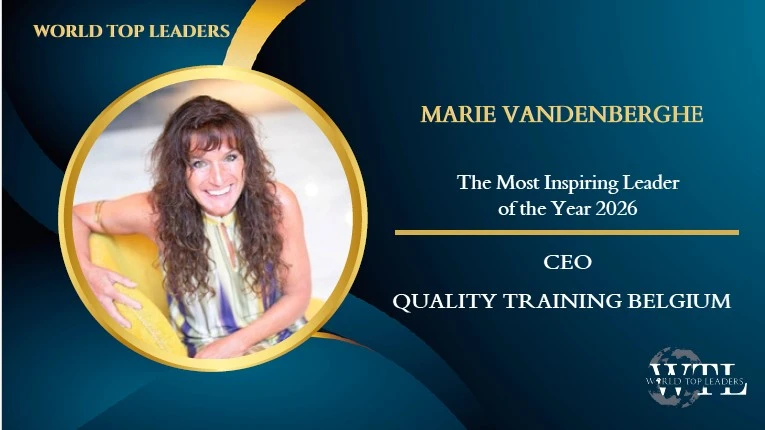
Marie Vandenberghe

Marie Vandenberghe( Quality Training Belgium) – The Most Inspiring Leader of the Year 2026

Marie Vandenberghe The Most Inspiring Leader of the Year 2026 Marie Vandenberghe: Building Better Organisations Through Human-Centred Learning Leadership is often measured through growth, performance, and results. Yet, behind every successful organisation are people who are willing to learn, adapt, collaborate, and grow. For Marie Vandenberghe, CEO of Quality Training Belgium, this human element has always been at the centre of leadership. Her professional journey began as a trainer before progressing into the role of Training Manager within a multinational company. Working closely with employees, managers, and HR teams gave her a first-hand understanding of the influence that effective learning can have on individuals and organisations. She saw how the right learning experience could improve not only professional performance but also confidence, motivation, and a person’s understanding of their own capabilities. A defining moment came in 2008, when she founded Quality Training with a clear purpose. She wanted to create an organisation built around humanity, agility, and active listening, while delivering learning experiences that were practical, tailored, and capable of producing measurable results. Today, as technology and Artificial Intelligence continue to reshape workplaces, Marie remains focused on a balanced approach. Rather than treating technology as a threat, she views it as an opportunity to rethink learning while placing greater value on skills that remain deeply human. Leading Through Trust and Empowerment Marie describes her leadership style as human-centred, collaborative, and purpose-driven. Her approach is not based on having every answer. Instead, she focuses on creating an environment where talented people can contribute, take initiative, and continue developing their abilities. Trust, respect, and open communication form the foundation of this culture. Over time, her leadership has also evolved significantly. In the early stages of Quality Training, she was highly involved in operations and personally delivered many training programmes. As the organisation grew, she recognised that effective leadership required a shift from doing everything herself to empowering others. That evolution has become one of the most rewarding parts of her leadership journey. Seeing trainers, project managers, and partners succeed together now represents a major source of satisfaction. Her inspiration comes not from one particular leader, but from people who combine strategic vision with genuine humility. She admires leaders who listen, serve others, and help people reach their full potential. Calm Decisions in Times of Change For Marie, strong leadership becomes particularly important during periods of uncertainty. Her approach to high-stakes decisions begins with listening. She considers the perspectives of clients and team members while also examining the realities of the situation. Rather than allowing fear or emotion to determine a decision, she believes effective choices should bring together data, experience, and human judgment. The COVID crisis and the rapid rise of Artificial Intelligence have reinforced this philosophy. Both periods required organisations to respond quickly without losing sight of their core values. Quality Training chose to remain agile, develop its learning portfolio, and help clients navigate transformation rather than resist it. Marie also believes that motivation is closely connected to purpose. People perform at their best when they understand why their work matters and feel trusted to contribute. Her philosophy can be summed up in her belief that excellence should become “a shared ambition rather than an obligation.” Making Innovation Meaningful Innovation is central to Marie’s vision, but she does not view innovation as the simple adoption of something new. For her, innovation has value only when it addresses genuine challenges and creates meaningful results for people and organisations. At Quality Training, staying relevant involves maintaining regular dialogue with clients, observing changes in the workplace, continuously developing trainers, and embracing emerging technologies such as Artificial Intelligence. This approach reflects a wider belief that technological progress and human development should move together. AI can improve productivity and transform how organisations operate, but Marie points to creativity, empathy, ethical judgment, communication, and leadership as qualities that remain distinctly human. The future, in her view, will favour organisations that know how to bring technological capability and human intelligence together. Navigating the Leadership Challenges Ahead The modern business environment presents leaders with several pressures at once. Technological acceleration, economic uncertainty, talent shortages, and increasing expectations around wellbeing and sustainability are changing the responsibilities of leadership. For Marie, one of the biggest challenges is helping people deal with constant change without losing their engagement, confidence, or sense of purpose. Her answer is continuous learning. Leaders themselves must remain curious and willing to adapt, while organisations need to make learning part of everyday work rather than treating it as an occasional activity. She also highlights the importance of balance. Organisations that focus heavily on digital transformation can risk overlooking the people responsible for making that transformation successful. The strongest organisations will therefore be those that combine innovation with empathy, performance with wellbeing, and ambition with responsibility. A Future Built Around Human Potential Looking ahead, Marie’s vision extends beyond the growth of a training organisation. She wants learning to be recognised as a force capable of unlocking human potential. Her advice to aspiring leaders is direct: never stop listening. That means listening to clients as their needs evolve, listening to teams because valuable ideas often emerge from those closest to the work, and listening to oneself because authentic leadership requires self-awareness. For Marie, leadership is not about being the most knowledgeable person in the room. It is about helping others become better than they believed they could be. That philosophy also shapes the legacy she hopes to create. She envisions a future where learning is valued not simply as a business function, but as a means of helping people and organisations reach their full potential. If Quality Training can contribute to organisations becoming more innovative, more human, and more respectful, while also supporting meaningful humanitarian initiatives beyond business, Marie believes that would represent a legacy worth building. The Impact of Learning-Led Leadership Marie Vandenberghe’s journey demonstrates how leadership can evolve without losing its original purpose. From her early experience as a trainer to her role as CEO, her focus

Marie Vandenberghe( Quality Training Belgium) – The Most Inspiring Leader of the Year 2026 Read More »

sukh sandhu

Sukh Sandhu( Compliance and Quality Assurance (CAQA) and Career Calling International.) – Most Influential Leader of the Year 2026

sukh sandhu Most Influential Leader of the Year 2026 Shaping Education and Compliance: The Lasting Impact of Sukh Sandhu Visionaries transform industries through determination and foresight. Sukh Sandhu is a leading figure in vocational education and compliance. As Founder and Director of Compliance and Quality Assurance (CAQA) and Career Calling International, he has built a legacy of integrity and innovation spanning more than two decades. His work ensures that training organizations meet regulatory standards while delivering meaningful results for learners and professionals. This article explores Sandhu’s journey, leadership principles, and vision for a fair and effective global education landscape. From Humble Beginnings to Pioneering Roles Sandhu’s professional journey began remarkably early. At age 14, a US-based organization selected him for roles in web development, design, training, and assessment. This experience launched a career marked by adaptability and a strong grasp of technology and education methods. Early projects sharpened his skills in digital solutions and instructional content, providing a solid foundation for his future work. After moving to Australia, Sandhu focused on the intersection of education, governance, and compliance. He observed how strong systems could directly influence learner outcomes and organizational performance. Within the vocational education and training (VET) sector, registered training organizations (RTOs) play critical roles in developing workforce skills. Sandhu noticed that many providers struggled to maintain standards amid evolving regulations, often affecting students and employers. Early RTO projects reinforced a key principle: compliance is more than checklists—it requires a culture of accountability, data-driven decisions, and processes aligned with growth. These insights inspired Sandhu’s entrepreneurial efforts. He founded Career Calling International to address gaps in career guidance and professional development, providing resources to navigate job markets. Later, he established CAQA, a consultancy dedicated to advancing compliance and quality assurance. Through these initiatives, Sandhu translated observations into solutions that help RTOs operate effectively in regulated environments. CAQA provides services such as audit preparation, policy development, and tailored training, while Career Calling International supports career alignment and skill-building. Over three decades, Sandhu has partnered with thousands of organizations across Australia and internationally, delivering strategies in risk mitigation, ISO certification, governance, legal reform, and executive development. Building Frameworks for Sustainable Success A key shift in Sandhu’s career was moving from fixing isolated issues to creating holistic frameworks. While early consultations focused on immediate compliance solutions, he recognized their limits. He developed integrated systems covering quality management, risk assessment, and scalable digital tools. These structures support organizations in Australia and abroad, demonstrating adaptability across changing regulations. At CAQA, compliance is treated as an enabler rather than a restriction. Sandhu’s team designs toolkits with real-time data analytics, allowing organizations to monitor performance and prevent non-conformance. Over the years, CAQA has produced tens of thousands of resources and auditing tools, reducing audit preparation time while enhancing transparency and consistency. Career Calling International applies similar principles, aligning career guidance with standards using evidence-based strategies. The growth of both companies reflects Sandhu’s foresight: CAQA now serves hundreds of clients, while Career Calling International has reached thousands through workshops and online platforms. Sandhu’s influence extends internationally. He has spoken at forums, including United Nations sessions, on student protection, digital learning ethics, and credential transparency. Membership in the Forbes Business Council and media features highlight his contributions, showcasing Australian governance and compliance innovation globally. Recent recognition includes the Advocate of the Year for Auditing Reforms at the 2025 Fluxx Awards, acknowledging his ability to transform compliance into a strategic advantage. Leadership Rooted in Values and Empowerment Sandhu’s leadership is grounded in values, data, and people. It emphasizes ethics, evidence-based decisions, and human potential. Over time, his approach evolved from directive oversight to encouraging team ownership and initiative. He mentors leaders to integrate standards, fostering shared accountability and environments where innovation thrives. This approach draws inspiration from Australian and international leaders committed to integrity and education access. Their dedication reinforces Sandhu’s belief that leadership amplifies underrepresented voices. As a certified ISO Lead Auditor and Fellow of the Australian Institute of Training and Development, he guides organizations through audits and governance improvements. Sandhu’s leadership manifests in trust-building and open dialogue. He encourages diverse perspectives, enhancing problem-solving and team purpose. By modeling learning from mistakes, he motivates teams to view setbacks as growth opportunities. At CAQA and Career Calling International, this approach results in high performance under pressure, with a clear understanding of impact on learners and organizations. Navigating Crises with Precision and Clarity Sandhu excels in high-stakes decision-making. His approach begins with problem clarification to prevent misdirection, followed by risk assessment to stabilize situations. Decisions are made transparently and promptly, with stakeholders engaged. Post-resolution, decisions and rationales are communicated, and outcomes measured to capture lessons. Organizations under his guidance use tools such as risk registers, decision logs, and scenario mapping. Daily reviews assign ownership and provide short feedback loops, maintaining alignment and responsiveness. Sandhu views audits as opportunities to improve rather than punish. Recognition of individual contributions and development opportunities further drives motivation. His expertise has helped institutions meet standards set by ASQA, TEQSA, and ISO bodies. Innovation as a Core Leadership Imperative Sandhu sees innovation as essential in rapidly evolving environments. Technology adoption is evaluated for fairness, transparency, and safety before implementation. He encourages small-scale pilots, gathers evidence, and scales successful solutions. Alignment with regulators ensures ethical and legal compliance. In the VET sector, this approach has produced AI compliance tools predicting audit risks and providing preventive suggestions. Career Calling International uses analytics to match skills to opportunities, personalizing guidance efficiently. Initiatives like CAQA Digital offer global professional development, marketing, and learning portals. Certifications in cybersecurity, Lean Six Sigma, and generative AI demonstrate Sandhu’s technical expertise. Tackling Global Leadership Challenges Sandhu identifies several contemporary leadership challenges: declining institutional trust, unequal opportunities, ethical AI use, responsible data practices, and balancing social and environmental responsibilities. He advocates practical, collaborative solutions, including adaptable cross-border frameworks, plain-language policies, and audit cultures focused on learning. This approach shifts the emphasis from punishment to improvement, creating resilient and flexible systems. Educational applications focus on inclusive

Sukh Sandhu( Compliance and Quality Assurance (CAQA) and Career Calling International.) – Most Influential Leader of the Year 2026 Read More »

Akanksha S Gulia wtl

Akanksha S Gulia( Deloitte) – The Most Remarkable Woman Leader of the Year 2025

Akanksha S Gulia The Most Remarkable Woman Leader of the Year 2025 Akanksha S. Gulia: Pioneering People-Centered Leadership Akanksha S. Gulia stands as a visionary leader whose career spans architecture, design, user experience, and innovation strategy. Her path is distinguished not only by a remarkable breadth of expertise but also by an unwavering dedication to championing empathy and strategic vision on the global stage. Akanksha’s leadership is defined by her ability to transform organizations, placing human potential and inclusive culture at the heart of every initiative across global projects. Through her dynamic approach, Akanksha has orchestrated transformations that prioritize human potential. She cultivates environments where diverse voices and talents converge, unlocking creativity and driving meaningful impact. She demonstrates a unique blend of curiosity and decisive action, empowering teams to excel in highly dynamic, multicultural contexts. Her leadership philosophy centers around empowerment and purpose. Akanksha views meaningful progress as a collective endeavor that uplifts individuals and leaves a ripple of positive change. Early Journey and Pivotal Shifts Akanksha’s professional trajectory emerged without a rigid blueprint. It unfolded as a series of explorations driven by innate curiosity and a conviction that human elements power innovation. She began her career in the disciplined realm of architecture, where precision, planning, and spatial harmony became the cornerstones of her approach. The transition into design broadened her perspective, prompting Akanksha to blend aesthetics with functionality while keeping user needs at the forefront. A transformative chapter unfolded as she ventured into user experience, immersing herself in the art and science of crafting digital interactions that resonate emotionally and intuitively with users. This focus on empathy, understanding how technology shapes human experiences, became a hallmark of her work. Propelled by a passion for forward-thinking solutions, Akanksha pivoted to innovation strategy, leading ambitious initiatives across continents. Each career pivot was united by a singular thread: the drive to motivate, inspire, and elevate people. Leading initiatives on multiple continents, her exposure to diverse cultures and contexts refined her insight that true transformation arises from the intersection of empathy and strategic vision. Today, she continues to orchestrate opportunities for collective growth, uniting diverse perspectives and amplifying the role of every participant in the success story. Akanksha’s blueprint for leadership is clear: prioritize people, foster belonging, and create spaces where authentic transformation takes root. Defining and Evolving Leadership Style Akanksha S. Gulia’s leadership journey is marked by constant growth, adaptability, and an unwavering focus on people. What began as a knowledge-centric approach has transformed over time into a leadership style defined by stewardship, facilitation, and empowerment. Early on, Akanksha equated influence with expertise. However, through global collaborations and cross-cultural experiences, she discovered the profound impact of active listening, humility, and genuine partnership. Embracing the role of an enabler, she sparks creativity by cultivating authentic relationships within her teams, fostering an environment where ideas flourish. Her immersion in multidisciplinary contexts across borders further refined her leadership, reinforcing the value of collective intelligence. Inspired by Ratan Tata’s enduring legacy of vision and kindness, Akanksha draws from his example—merging strategic foresight with compassion to create lasting impact. Tata’s principled calm and quiet resolve echo her own values, underscoring a deep commitment to empathetic, inclusive guidance. A guiding principle stands at the center of Akanksha’s leadership philosophy: “True leadership is the art of enabling possibility in others, even before they see it in themselves.” By building cultures rooted in trust and belonging, she empowers teams to reach extraordinary new heights. Strategies for Crisis and Motivation In high-pressure situations, Akanksha’s approach is grounded in steady flexibility and presence of mind. She begins by pausing to assess each challenge thoughtfully, balancing data-driven analysis with attention to the human dimension. Actively seeking diverse perspectives, she charts the most effective way forward, striking a balance between speed and sound judgment. Central to her leadership in difficult times is her steadfast philosophy: “In times of challenge, leadership means igniting belief in possibility and guiding teams to turn obstacles into launchpads for growth.” Guided by this principle, Akanksha emboldens her teams to look beyond immediate setbacks, transforming adversity into opportunities for innovation and progress. Her method combines logical rigor with intuitive insight, always underscored by open, transparent communication. By sharing full context and inviting broad input, she builds trust and ensures that teams are equipped to navigate ambiguity. Akanksha further inspires superior performance by linking every effort to a larger, compelling purpose and fostering shared responsibility toward common goals. Motivation, for Akanksha, is anchored in shared purpose and accountability. She translates ambitious goals into compelling collective missions, inspiring her teams to take ownership of outcomes. By celebrating incremental successes, she sustains momentum and cultivates a culture where creativity and resilience thrive. Akanksha’s optimism serves as a guiding light, helping others reframe challenges as opportunities for growth. She believes every obstacle is a catalyst for innovation, a philosophy that has repeatedly transformed setbacks into platforms for team excellence. The results speak for themselves: under Akanksha’s direction, groups routinely achieve and exceed expectations through unity, trust, and inspired action. Her enduring impact lies in aligning personal aspirations with wider organizational objectives, ensuring drive and determination persist long after the challenge has passed. Innovation as Leadership Core For Akanksha S. Gulia, innovation is not an occasional spark but the ongoing heartbeat of effective leadership. She treats it as a daily navigational principle, structuring her decisions and team dynamics around the relentless pursuit of creative, forward-thinking solutions. Akanksha’s professional journey, spanning multiple fields and continents, underscores her conviction that genuine progress stems from questioning norms and daring to challenge established conventions. She thrives on embracing the unknown, fostering a culture where inquiry and experimentation are celebrated. In her world, setbacks become stepping stones, and diversity is a shared resource for collective ingenuity. To stay ahead of the curve, Akanksha remains attuned to global trends and immerses herself in cross-industry dialogues, seeking new perspectives from experts in a wide array of domains. She empowers her teams to co-create solutions that defy convention and encourages agile adaptation—not

Akanksha S Gulia( Deloitte) – The Most Remarkable Woman Leader of the Year 2025 Read More »

Dr. Abhishek Gilara

Dr. Abhishek Gilara( Rambhajo) – Most Transformational and Dynamic Business Leader of the Year – 2025

Dr. Abhishek Gilara Most Transformational and Dynamic Business Leader of the Year – 2025 Dr. Abhishek Gilara is a fourth-generation luxury jeweller and the Managing Director of Rambhajo’s, where he blends Jaipur’s century-old Kundan, Meena, Polki, and Jadau heritage with modern strategy, technology, and global brand building to serve a discerning clientele across continents. His leadership extends beyond craft into authorship, public speaking, and thoughtful stewardship of a legacy house established in 1921, positioning Rambhajo’s for its second century of excellence without losing the soul of its artisanal roots. A Century-Old House Rambhajo’s traces its origins to 1921, when Late Shri Kishan Gilara, revered as Rambhajo, set up the atelier in Jaipur, rooted in devotion and meticulous workmanship that would define the house’s name and ethos for generations. The brand evolved through successive generations who scaled designer Kundan Jadau and Polki manufacturing, building trust in transparency, artisanal rigor, and value for money while Jaipur emerged as a global hub for gems and jewellery. Today, Rambhajo’s embodies “where heirlooms begin,” combining kundan polki techniques with contemporary aesthetics to craft pieces designed to endure and be passed down the lineage. Fourth-Generation Stewardship As Managing Director, Dr. Abhishek Gilara leads a 100-plus-year enterprise with a clear mandate to protect heritage while modernizing reach, systems, and market relevance across India and overseas. He is part of the fourth-generation leadership alongside siblings who have digitized and systematized the business to scale responsibly while preserving atelier-grade quality. His remit covers high-value bridal and bespoke segments in Kundan, Meena, Polki, and Jadau, with creations that span from lakh-level commissions to crores for discerning patrons. Craft Anchored In Jaipur The Jaipur atelier remains the creative and cultural heart, where gemstone selection, design translation, and finishing are executed with fidelity to the city’s syncretic design vocabulary and craft lineage. The house’s vocabulary integrates Rajputana, Mughal, and Deccan influences in forms that balance heirloom gravitas with modern wearability for bridal and ceremonial contexts. Each piece is approached as a study in proportion, surface, and stone setting that reads elegant at arm’s length and intricate under a loupe, which is why Rambhajo’s has remained a reference name in Kundan and Jadau for a century. Strategy: Heritage With Innovation Dr. Gilara’s strategy pairs traditional making with process discipline and technology integration so the workshop scales without diluting signature quality. Younger generation systems have introduced IT-enabled workflows and contemporary operations that shorten cycles from design to delivery while maintaining artisan-first standards. The result is a house that operates globally yet keeps Jaipur craftsmanship central, serving hundreds of thousands of patrons across five continents with consistent finish and authentic techniques. Global Brand Building Under his leadership, the brand has expanded its footprint, earning industry recognition and editorial features that affirm a positioning at the intersection of heritage and modern luxury. Recognition across platforms such as TradeFlock and AsiaOne chronicles a narrative of revitalizing a legacy label for contemporary markets while staying true to the atelier’s founding values. Media spotlights frame him as a visionary who manages legacy and reinvents it simultaneously, elevating Indian bridal artistry on global stages and within the country’s luxury retail arena. Clientele And Commissions Rambhajo’s caters to bespoke bridal patrons who seek one-of-a-kind sets where design coherence across necklace, earrings, maang tikka, bangles, and rings matters as much as gemstone pedigree and handwork excellence. The house’s work spans 5 lakh to multi crore commissions, a range that reflects both accessibility within luxury and the ability to deliver museum-grade pieces for lineage collections. This barbell approach allows the atelier to nurture lifelong relationships with families who return for weddings and milestones, deepening the house’s role as custodian of memory and ritual. Leadership Philosophy Dr. Gilara articulates leadership as a balance of reverence for tradition and a bias for forward motion, a theme he reinforces in public commentary and personal writing about resilience and growth. He credits pressure, practice, and perspective with turning raw potential into refined output, echoing the carbon to diamond metaphor that mirrors gemology and leadership alike. This philosophy informs how he mentors teams, engages artisans, and frames the brand’s commitment to trust, transparency, and year-on-year excellence. Author And Public Voice Beyond the atelier, he contributes as an author and public speaker, using writing to distill lessons on leadership, simplicity, and craftsmanship learned from the bench and the boardroom. His official site profiles a body of work that includes reflective prose and poetry, which positions craft not only as a product but as a way of seeing and building character over time. This public voice has helped extend the brand narrative beyond jewellery into ideas of heritage stewardship, discipline, and creative purpose. Recognition And Honors Industry and cross-industry platforms have recognized his achievements, including leadership features and awards that spotlight both business growth and cultural contribution. AsiaOne cited him within its India’s Greatest Brands & Leaders program, acknowledging his stewardship of a legacy house and its modern articulation at a national forum in New Delhi. Editorials in business and leadership publications have profiled his approach to marrying legacy and innovation, further cementing his reputation in luxury retail. Advancing Craft Through Systems The modern Rambhajo’s workflow demonstrates how digital tools can support handmade excellence by improving planning, documentation, and customer experience without compromising hand skill. Systematization enables the atelier to uphold uniform standards across collections and bespoke orders, a requirement when serving an international client base with nuanced specifications. The backbone of consistent quality is still the master artisan’s hand, yet the infrastructure around that hand keeps promises on timelines, finish, and after-sales care. Market Positioning Rambhajo’s maintains a clear center in Kundan and Jadau while engaging contemporary tastes through proportion updates, lighter wear, and design modularity suited for multi-occasion use. The brand narrative stresses authenticity, gemstone integrity, and finishing that reads refined in high definition media and in intimate settings alike, which is essential in today’s social and bridal ecosystems. This calibrated positioning keeps the label anchored in heritage while relevant to new age luxury consumers who value

Dr. Abhishek Gilara( Rambhajo) – Most Transformational and Dynamic Business Leader of the Year – 2025 Read More »

Paul Taylor

 Paul Taylor( Paul Taylor Associates) – Most Iconic Leader of the Year 2025

Paul Taylor Most Iconic Leader of the Year 2025 Paul Taylor’s Portfolio of Purpose: Building Value Through Ethics, Curiosity, and Pragmatic Leadership Paul Taylor has built a career defined by breadth, responsibility, and a steady commitment to doing the right thing, evolving from a hands-on technologist in banking to a portfolio leader whose work spans consultancy, governance, education, writing, and mentorship. His journey began in 1988 at a well-known UK private bank in the Information Technology department, where the small size of the institution became an advantage that broadened his exposure to diverse businesses, systems, and stakeholders across financial services. Nearly two decades later, after holding roles culminating in Head of Software Development at a large bank’s European outsourcing subsidiary, he took a decisive turn to freelancing in 2007, converting long-maturing intentions into action and embracing the uncertainty of finding work, rates, and runway on his own terms. That decision ultimately led to a deliberately diversified portfolio career that now includes consultancy and project management, chair and trustee responsibilities, non-executive and board advisory positions, education, public speaking, authorship of five books, and one-to-one mentoring. Early Foundations Taylor’s formative years in a small, full-service banking environment gave him a training ground in complexity and context, where technology was inseparable from business outcomes and client trust. The proximity to product, regulation, and operations built instincts that later informed his project management across outsourcing initiatives, product launches, technology changes, regulatory implementations, and interim assignments in high-stakes environments. Those years also surfaced a recurring question about autonomy and direction, which he eventually answered by stepping into independent work and gradually shaping a multifaceted platform for leadership. The Portfolio Model What began as project leadership in financial services has become an intentional structure designed to compound learning and impact across complementary domains of practice. Consultancy and project delivery keep him close to execution, while chair, trustee, and NED roles position him to shape governance, culture, and longer-term value creation. Education and speaking extend his reach to audiences that benefit from practical clarity, and writing formalizes his thinking, with five books and various articles anchoring a record of ideas that continue to evolve through dialogue and application. The one-to-one mentoring completes the loop, bringing leadership down to the level of individual growth where progress is most tangible. An Ethical First Leadership Style Taylor defines his leadership philosophy as ethical leadership that strives to do the right thing for all stakeholder groups, including customers, staff, suppliers, society, and shareholders, while recognizing that trade-offs are inevitable. He advocates for explicit impact assessments that map benefits and drawbacks across stakeholders, and for management practices grounded in tact, honesty, clear communication, fairness, and trust when steering change. This orientation is not static for him, and he notes a personal evolution from a rigid, plan-driven approach early in his career to a more adaptive model that accepts volatility and centers on people, integrity, and responsiveness. Growth Through Curiosity Asked about leadership inspirations, Taylor resists naming a single model, instead acknowledging a wide and eclectic set of influences from colleagues to public figures encountered through books and media. Two names stand out as enduring guides for his mental posture toward work and life: Leonardo da Vinci and Richard Feynman, both of whom reinforce the joy of learning and the discipline of discovery that Taylor brings to his practice. The theme that emerges is curiosity coupled with rigor, where learning is not just the consumption of information but an active investigation in the service of better decisions and better outcomes. A Disciplined Approach to Crises Taylor’s method for handling high-stakes decisions and crises starts with clarity, which means stripping away noise to define the problem precisely, whether that is a cyber incident that disables a website or another disruption with external touchpoints. He emphasizes inclusive solution design that brings relevant stakeholders into the room so their perspectives and constraints shape the plan, even if not every request can be accommodated. Once a solution path is selected, implementation proceeds with rigorous updates to all parties, especially external stakeholders such as clients, media, and regulators who may be affected by the organization’s operational status and remediation timeline. Motivating for Excellence There is no single script for motivation in Taylor’s view since people and contexts vary, but the core practices are consistent and practical. He keeps teams focused on the primary goal, ensures approachability so difficult truths can surface early, recognizes contributions, and operates with integrity that aligns words and actions. Communication remains constant in his framework, with progress, setbacks, and issues made visible to maintain trust and accountability during delivery. Innovation With Sobriety Taylor’s stance on innovation is supportive yet skeptical of rhetoric, noting that the term is frequently overused to imply improvement that fails to materialize, particularly in public service contexts where promised efficiency gains often remain theoretical. He cautions against change pursued for its own sake, arguing that some systems work well and are best improved incrementally on an evolutionary path rather than through forced novelty that outpaces capability. He identifies several recurring barriers to innovation, including weak cultures, fear of failure, insufficient leadership sponsorship, resistance to change, and resource constraints that undermine execution even when ideas are sound. Staying Ahead For Taylor, staying current in a fast-moving global landscape is an active, continuous process that combines learning by doing, structured learning through courses and content, and learning by observing other practitioners. Practical implementation builds tacit knowledge that cannot be replicated by theory alone, while books, webinars, and articles provide a scaffold that compresses lessons learned across domains. Collaboration and inquiry round out the model, where watching others work and asking questions become a direct line to methods that can be adapted and applied in new settings. Four Challenges Facing Leaders Taylor points to climate change as the primary challenge, citing direct lived experience of hotter summers and colder winters in the UK and calling for meaningful action from global leaders to address environmental risks. He identifies society’s growing reliance on technology

 Paul Taylor( Paul Taylor Associates) – Most Iconic Leader of the Year 2025 Read More »

Barbara Maglione

Barbara Maglione ( Farmaceutici Damor S.p.A) – Most Iconic Woman Leader of the Year

Barbara Maglione Most Iconic Woman Leader of the Year Barbara Maglione: Transforming R&D Leadership With Purpose, Precision, and Humanity A science-first leader with a people-centered compass, Barbara Maglione leads as Head of Research and Development at Farmaceutici Damor S.p.A., where she blends rigorous decision-making with a culture of curiosity, trust, and impact for patients and society. Drawing from a journey that began at the lab bench and advanced through high-stakes restructuring and strategic stewardship, she champions a style that elevates teams, accelerates innovation, and holds integrity as the ultimate north star. Barbara’s path to leadership began with a deep passion for science and a practical conviction that research should improve lives, a belief she strengthened through hands-on work in the scientific and research field early in her career. Seeing the tangible effects of research on patient outcomes anchored her purpose and sharpened her resolve to pursue roles of growing responsibility where scientific rigor meets organizational influence. That momentum culminated in a shift toward management, where she discovered that shaping direction, mentoring colleagues, and orchestrating resources could multiply the impact of research across the enterprise. Turning Points Two inflection points mark her ascent with clarity and consequence, beginning with a decisive move from individual contributor to managerial leadership that unlocked broader stewardship across programs and people. The second was her leadership of a high-stakes restructuring initiative, which demanded strategic redesign, crisp communication, and change navigation under pressure, ultimately preparing her to guide complex portfolios at scale. Those experiences cemented a pattern in her leadership approach, one that combines analytical calm with accountability and clear purpose when the stakes are highest. Decision-Making Under Pressure In high-stakes moments, Barbara relies on calm analysis anchored in data, complemented by expert consultation and transparent communication of risks and pathways forward. Her crisis playbook aligns facts, scenarios, and trade-offs with swift, open dialogue, preserving trust and morale while aligning teams around actionable next steps. This disciplined approach ensures decisions preserve scientific standards and patient relevance while delivering organizational clarity during uncertainty. Barbara inspires excellence by combining clarity of vision with distributed ownership, encouraging teams to take initiative while making space for learning through intelligent risk-taking. She celebrates achievements visibly and ties daily work to meaningful outcomes for patients and communities, which strengthens purpose and elevates day-to-day engagement. Psychological safety is foundational in her teams, where constructive failure is treated as a step toward better design and stronger evidence. Innovation as Practice For Barbara, innovation is not a slogan but disciplined execution across research investment, partnerships, and continuous learning that keeps science responsive to changing realities. Her teams track industry shifts, geopolitics, and emerging technologies to anticipate pivots, while cultivating curiosity as a daily habit that fuels creative hypotheses and better questions. By blending external collaboration with internal capability building, she ensures that knowledge flows across boundaries and accelerates translational outcomes. Farmaceutici Damor’s Heritage and Context Farmaceutici Damor’s heritage as an Italian pharmaceutical company with deep research roots and a commitment to quality provides the institutional framework within which Barbara leads R&D. The company’s focus on research and development, manufacturing excellence, and specialized know-how positions it to translate science into accessible products with rigorous compliance and international standards. From Triticum Vulgare extract expertise to GMP-aligned production in Naples, the organization’s foundations align with Barbara’s approach to evidence and integrity. Barbara navigates the inherent tension between rapid innovation and scientific integrity by aligning cross-functional teams on shared values, open checkpoints, and a clear evidence threshold for advancement. Her approach emphasizes collaboration between R&D and compliance functions, ensuring breakthroughs do not outrun the governance that protects patients and trust. This balance allows Damor’s pipeline to move with agility without compromising reproducibility, quality, or ethical standards. Building Resilient Teams Barbara’s teams reflect the diversity of disciplines and perspectives, which she views as essential for resilience, adaptability, and creative problem-solving in a volatile environment. She equips teams with autonomy, tools, and a supportive environment that values both precision and imagination, creating room for exploration guided by rigorous experimental design. Continuous feedback loops and mentorship strengthen capability while aligning individual growth with portfolio needs. Staying ahead means investing in learning systems that capture insights from experiments, collaborations, and the market, transforming data into decisions and strategy. Barbara and her team actively pursue partnerships that share risk and knowledge, expanding reach while concentrating internal resources where Damor has distinct capabilities. This blended model catalyzes discovery while maintaining focus on therapeutic areas where the company can deliver differentiated value. Managing Crises Barbara’s crisis management emphasizes transparency, decisive action, and morale stewardship, recognizing that people anchor performance in turbulent times. By laying out the challenge, the plan, and the rationale in plain terms, she maintains alignment and fosters the confidence required to execute under pressure. Her method sustains trust, which is the invisible infrastructure that keeps teams cohesive when timelines compress and stakes rise. Technology and Trends She follows global trends and emerging technologies closely to ensure R&D is not only current but anticipatory, integrating tools and methods that accelerate quality and insight. The interplay of data science, advanced analytics, and domain knowledge is a focal point in her outlook, enabling better design and faster iteration across programs. Geopolitical and economic signals also inform scenario planning, so portfolio strategies remain robust in shifting markets. Barbara views corporate social responsibility as a core leadership mandate, not a peripheral initiative, aligning organizational choices with ethical commitments and sustainability. She believes leaders must build adaptable organizations that respond quickly to external pressures while safeguarding long-term trust with patients and communities. That stance translates into practices that prioritize patient centricity, environmental stewardship, and transparent stakeholder engagement. The R&D Mandate Within Damor’s R&D, Barbara emphasizes focused investment, clearer decision gates, and collaboration that shortens the distance between a promising signal and patient benefit. The organization’s specialized research capability and quality systems provide the bedrock for reproducible results that can scale into manufacturing and global partnerships. That continuum from lab to line is central to her mandate to deliver reliable,

Barbara Maglione ( Farmaceutici Damor S.p.A) – Most Iconic Woman Leader of the Year Read More »

Priyanka Das

Priyanka Das (Ford Motor Company) – Most Innovative Leader in Robotics and AI-Driven Manufacturing Excellence 2025

Priyanka Das Most Innovative Leader in Robotics and AI-Driven Manufacturing Excellence 2025 The automotive and manufacturing sector is a high-tech and dynamic industry that is at the heart of world economies. It involves the production, design, development, manufacturing, and distribution of vehicles and vehicle components. The industry usually involves intricate supply chains and high-precision engineering. Driven by the high demands for sustainability, efficiency, and innovation, the sector swiftly embraces technologies such as data analytics, robotics, Internet of Things (IoT), and automation. These developments transform production processes, enhance product quality, and fuel the move to electric and self-driving vehicles. In addition, the sector is leading the way in environmental responsibility, adopting lean manufacturing and environmentally friendly approaches to minimize waste and carbon emissions, as well as keeping pace with changing customer and regulatory demands. Priyanka Das is an exceptional presence in controls engineering and advanced manufacturing. With a solid background in robotics, applied know-how in high-risk industrial environments, and a zeal for intelligent automation, she has built a leadership career distinguished by innovation, perseverance, and teamwork. Her remarkable journey from research at academe to spearheading international initiatives at Ford Motor Company demonstrates how curiosity, ongoing learning, and compassion can turn obstacles into possibilities and drive excellence in teams and industries. From Magnetic Maps to Model 3s: How Robotics Research Ignited a Career in Innovative Automotive Technology Priyanka Das’s path to becoming a leader in her field was defined early on by her passion for problem-solving and smart systems. She completed her Master’s in Electrical Engineering with a specialization in Robotics from the University of Cincinnati, where she immersed herself in advanced research on localization algorithms for autonomous systems working within GPS-denied environments. One of the most characteristic projects throughout her academic career was creating a magnetic particle filter to position ground robots based on Earth’s magnetic anomaly maps. This project required expertise in Kalman filters, state estimation, and sensor fusion, all of which helped shape her analytical thinking and technical rigor. More significantly, the project ignited her interest in discovering real-world, meaningful applications of robotics and automation. Her scholarly achievements weren’t merely about skill-building; they were about purpose-building. This solid grounding in research and automation provided her with a distinct advantage as she moved into industrial positions, where creativity and accuracy are both important. Having pursued her post-graduate education, Priyanka made a key career decision when she became an Associate Controls Engineer at Tesla. It was an experience that proved to be a defining milestone in her career. As a controls engineer at Tesla, she had a significant part in the automation systems of manufacturing inverters, battery packs, and cells for the Model 3, Model Y, and S Plaid lines of the company. Priyanka’s task was far from passive; she was deeply involved in ordering machines from concept to production readiness, a role that required hands-on experience and coordination at the top level. She was responsible for improving robotic operations by minimizing cycle time, thereby optimizing productivity along the manufacturing lines. Her work entailed resolving intricately complicated control system problems, meeting deadlines, and interacting with mechanical, electrical, and software engineering departments. The high-pressure, high-speed environment at Tesla honed her leadership abilities, particularly in managing cross-functional dynamics and producing results in the face of pressure. Here is where Priyanka started to envision herself not only as a problem-solver but as a leader who can inspire, delegate, and create innovation. From Resolving Engineering Problems to Empowering Teams through Empathy: How Priyanka Das Transformed from a Technical Specialist to a Collaborative, Adaptive, and Mission-Motivated Leader Priyanka defines her style of leadership as collaborative, adaptive, and mission-driven. She believes that one should lead by example by rolling up their sleeves when required, along with empowering others to initiate and own what they do. Her leadership experience has transformed from being highly technical to being highly people-oriented. Early in her career, her attention was directed toward fixing engineering issues, sometimes alone or as part of a small team. As time passed, particularly at Tesla and Ford, she understood that leadership wasn’t so much about knowing all the answers as it was about getting different groups of people pointed in the right direction. If asked what inspired her most about leadership, Priyanka points to a senior manager she had while working at Tesla. This mentor was not only technically genius but also emotionally intelligent, aspects that resonated with Priyanka. How the manager managed to survive under tremendous pressure while mentoring and developing junior engineers had a lasting impression. She managed with empathy, made evidence-based decisions, and motivated her team to be innovative without hesitation. To Priyanka, this illustration drove home an essential truth: leadership is not authority; it’s influence, trust, and about elevating others. This mindset has guided Priyanka’s leadership style to this day. She remains a mentor to junior engineers, fosters fearless ideas, and helps her colleagues develop professionally and personally. Priyanka is staunchly committed to open communication, mutual accountability, and persistent improvement. She makes sure that her teams appreciate themselves and are motivated, knowing that perfection is best attained when each member is heard and empowered. Grace Under Pressure: Crisis Management Mastery, Team Motivation Inspiration, and Calm Leadership in High-Risk Situations Navigating high-stakes crises and situations is a core aspect of Priyanka’s job. Her methodology is rooted in three pillars: problem-solving, open communication, and leadership that remains composed. Confronting serious production problems, whether in the launch of a plant or the fixing of faults in a control system, Priyanka starts by capturing appropriate data, recognizing underlying causes, and establishing explicit priorities. She rallies her team with a common goal and improvises as matters unfold. To motivate her team, she strives to develop an ownership and respect culture. She acknowledges each input, provides helpful feedback, and makes her team members understand the larger implications of their work. By developing a culture of learning and trust, Priyanka keeps her team motivated even when under pressure. She keeps reminding them that failure is a means to learn

Priyanka Das (Ford Motor Company) – Most Innovative Leader in Robotics and AI-Driven Manufacturing Excellence 2025 Read More »

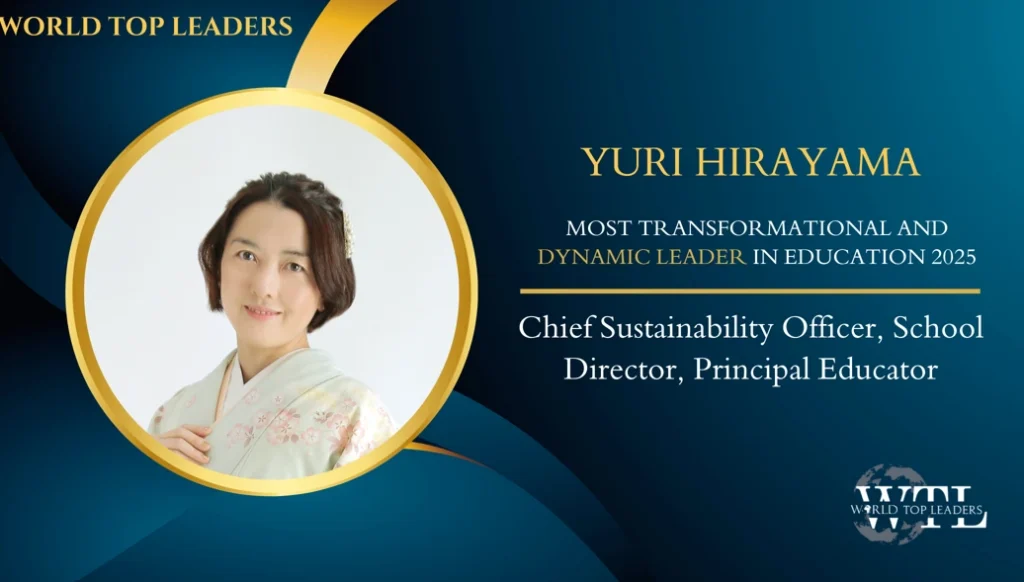
Yuri Hirayama

Yuri Hirayama (Yuri Education Center) – Most Transformational and Dynamic Leader in education 2025

Yuri Hirayama Most Transformational and Dynamic Leader in education 2025 The education industry plays a key role in shaping individuals and society. It focuses on teaching knowledge, skills, and values to learners of all ages from young children to adults. This industry includes schools, colleges, training centers, and learning programs, both in physical classrooms and online. Education helps people grow personally and professionally, build confidence, and become responsible citizens. It also supports communities by improving literacy, promoting equal opportunities, and encouraging lifelong learning. In recent years, there has been a stronger focus on sustainability, innovation, and emotional development in education. New methods such as hands-on learning, digital tools, and global exchanges are making education more flexible, inclusive, and connected to real-world challenges. Yuri Hirayama is the Chief Sustainability Officer, School Director, and Principal Educator at the Yuri Education Center. She leads an institution that seamlessly integrates sustainability, cultural heritage, and education, with a special focus on empowering young people and mothers. Through community-centered initiatives and a deep-rooted commitment to experiential learning and cross-cultural dialogue, she nurtures socially conscious and capable leaders. Her work is driven by academic rigor, emotional intelligence, and a profound belief in the power of education to shape the future. From Purpose to Impact: How Yuri Hirayama Turned Her Passion for Education into a Life-Changing Movement for Mothers, Youth, and Sustainability Yuri Hirayama’s professional journey is not just a career story; it is a narrative shaped by purpose, vision, and unwavering dedication to the well-being of society. Her deep-rooted belief that education can transform not only individuals but entire communities led her to create a center that stands as an example of innovation and inclusivity. Her commitment to education began early and grew stronger with each step she took. For Yuri, education has always meant more than academic excellence. She saw it as a powerful tool for empowering people, preserving cultural values, and promoting environmental stewardship. With this vision in mind, she founded the Yuri Education Center, a place that brings together the values of sustainability, cultural awareness, and community support under one roof. One of the most significant moments in Yuri’s career was the creation of “Yuria’s Happy English”, a program designed for mothers and their young children. The intent was not just to teach English but to offer a nurturing environment where emotional connections could thrive alongside environmental awareness. This program became a gateway for introducing sustainability concepts at a foundational level, encouraging families to build relationships grounded in empathy and eco-conscious values. Through this initiative, Yuri came to realize the significant impact that early childhood education can have on fostering social and ecological responsibility. It was a turning point that further validated her mission. Following this success, Yuri developed another transformative initiative: “Waste to Wow!”. The idea was simple yet profound: Take discarded items and transform them into useful or beautiful creations. Through this initiative, Students were encouraged to rethink their perception of waste and learn that what is often seen as useless can, with creativity and effort, become meaningful. This program taught students not only environmental responsibility but also resilience and innovation. The idea of turning something neglected into something valuable resonated deeply with her philosophy of education as a tool for uplifting lives. Her journey continued with the creation of the “You Lead” program, an initiative that reflects her belief in youth leadership. This program empowers young people to explore global issues, develop their voice, and engage meaningfully with their communities. By encouraging learners to step into leadership roles, Yuri helps them become agents of change. Her educational methods are not just confined to books and classrooms; they extend into the real world through inquiry-based, interdisciplinary approaches that blend science, sustainability, and language skills. Students don’t just learn, they inquire, engage, and act. Leading with Heart and Growth: The Transformative Journey of Yuri Hirayama’s Leadership Style Yuri’s leadership is marked by a rare combination of strength, empathy, and inclusivity. Over the years, her leadership style has transformed and matured. In the beginning, she focused heavily on structure, curriculum, and the technical aspects of education. However, through interactions with students, mothers, and educators, she began to recognize that leadership must also be emotionally intelligent and culturally responsive. Today, Yuri’s leadership style is centered on empathy and inclusivity. She creates an environment where every voice matters, whether it belongs to a student, a parent, or a staff member. She understands that people thrive when they feel heard, respected, and supported. That is why collaboration, rather than authority, forms the backbone of her leadership philosophy. Her inspiration stems not from any one person but from the collective strength of the women and youth she works with daily. Their resilience, creativity, and determination have shaped her perspective and refined her leadership. These individuals have shown her that leadership is not about commanding but about uplifting others, being vulnerable, and listening deeply. Yuri also values the contributions of professionals and collaborators who participate in her programs. Sustainability experts, educators, and innovators bring valuable insights that continuously enrich the Yuri Education Center’s work. These diverse voices ensure that her leadership remains dynamic and informed by a broader worldview. Yuri views leadership as a lifelong journey, one shaped by constant learning, reflection, and a willingness to grow. Grace Under Pressure: How Yuri Hirayama Leads with Integrity, Clarity, and Collective Strength in Critical Moments Leading an educational institution that is committed to real-world change comes with its share of challenges. Whether it’s navigating unforeseen circumstances or making impactful decisions, Yuri approaches each situation with clarity, honesty, and a deep grounding in shared values. Her philosophy in high-stakes moments is captured in a guiding principle embraced by her team: “We courageously discuss, actively lead, and collectively act.” This simple yet powerful mantra reflects her belief in transparency, dialogue, and collective ownership. In times of uncertainty, Yuri ensures that every team member feels involved and valued. She fosters a culture where strengths are recognized, contributions are celebrated, and even small achievements

Yuri Hirayama (Yuri Education Center) – Most Transformational and Dynamic Leader in education 2025 Read More »

Please enable JavaScript in your browser to complete this form.